
Lostock High Readers
Not Going To Plan
Going to Plan is an enjoyable book with an interesting story and relatable characters. It teaches important lessons about adapting when things don't go as expected. I would recommend it to other readers.
Shalini
Ghostlines
Ghost Lines was a good read. The ghost parts are creepy with whispers and cold spots, but it’s not just scares. There’s also a mystery you solve with the main character, and the friendship in the story makes it feel real. If you like tense stories with more than just ghosts, give it a try.
Aasyah
Birdie
Birdie was okay. I liked the main character’s voice and some parts hit hard emotionally. But the middle dragged a bit and it felt repetitive. Still, the ending made up for it. Good if you’re into stories about family and growing up.
Aasyah
Wolf Siren
I really enjoyed the Wolf Siren, the characters have strong belifs in the wolf story and the dialogue is witty and engaging. The “wolf siren” concept adds an interesting supernatural element that raises the stakes throughout the story. With its themes of loyalty and independence, plus a heroine who takes charge, it’s an exciting and well-paced read I would recommend to anyone who likes fantasy and mystery
Aasyah
Ghostlines
Was really good and amazing
Raziela
Wolf Siren
I love this book! It's nice too see the wolf and red get along near the start, it's funny how the grandma keeps on disappearing.
isabella
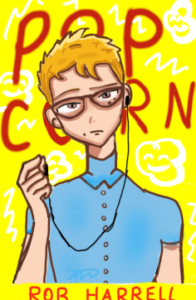
Popcorn
I LOVEEE it the mc has such good writing and its so interesting seeing life from his pov:3
Alissia
Chronicles of a Lizard Nobody
I personally don't like it because it's not really my genre of book to read and I thought it was really silly for my type of genre that I read.
Islah
Ghostlines
Ghostlines is a mysterious and emotional story filled with adventure and suspense. I enjoyed the island setting and the way the characters’ friendships developed throughout the book. The story was engaging and meaningful, making it a memorable read.
Shalini
Wolf Siren
Wolf Siren is an exciting and emotional book filled with mystery and adventure. I enjoyed the suspense and the strong character development throughout the story. The author’s descriptive writing made the scenes feel vivid and engaging. Overall, it was a great read that I would recommend to people who enjoy fantasy and action.
Shalini
Twenty Four Seconds from Now
I really liked the way the author wrote the book by going back in time to when the couple met and at the end what they currently are.
Shekinahglory
Ghostlines
This felt like stepping into salt air and staying there a while.
Katya Balen just gets this kind of story. Small places. Big feelings. The quiet ache of growing up without quite realising it’s happening.
Ayrie is one of those settings that wraps around you. Puffins, bonfires, cold water, everyone knowing your name and your story whether you like it or not. It’s soft and wild at the same time. And Tilda belongs to it in that deep, instinctive way children belong to places.
And then Albie arrives. Closed off. Resistant. Not wanting any of it.
I loved that tension. The push and pull between loving a place and rejecting it. Between holding on and letting go.
This is really a story about belonging. But also about the quiet grief of change. Of people leaving. Of things not staying as they were, no matter how much you want them to.
The adventure element is there too. The forbidden island. The sense of danger. That flicker of something almost ghostly. Enough to give it edge without ever losing that warmth at its core.
And the community… I really loved that. It feels rare to see that kind of collective care written without cynicism. It’s gentle. Earnest. It works.
If I’m being honest, it didn’t hit quite as deeply as some of her previous books for me. I could feel what it was reaching for, but it didn’t always fully land with the same emotional weight. At times it felt a little lighter than I wanted it to be.
But still. There is something genuinely lovely here. Thoughtful. wholesome without being shallow. Full of nature and wonder and that restless, in-between feeling of growing up.
4★
A quiet, sea-soaked story about home, and the strange, invisible lines that keep pulling us back to it.
Mrs Naden
Not Going To Plan
This is one I have mixed feelings about.
I can see what Tia Fisher is trying to do in Not Going to Plan, and there are definitely parts that work well. The writing is very accessible and the verse format makes it a quick, engaging read. It’s the kind of book that’s easy to get into, even if you’re not usually a big reader.
The friendship between Marnie and Zed is probably the strongest part of the book. They are very different, but their relationship develops in a believable and supportive way. I also liked the inclusion of art as a form of self-expression, and the resources at the end are helpful and clearly included with care.
However, I did find that the book lacks depth in places. Some of the characters feel quite stereotypical rather than fully developed, which made it harder to connect with them on a deeper level.
The main storyline focuses on an unplanned pregnancy, and this is where opinions may vary.
The book presents one particular perspective quite strongly, and doesn’t explore a wide range of viewpoints in much depth. Because of this, some readers may feel that the topic isn’t examined as fully or as thoughtfully as it could be.
I also felt that there wasn’t a huge amount of character growth by the end of the story. Some of the decisions and behaviours earlier in the book aren’t really reflected on in a meaningful way, which made the overall journey feel a bit incomplete.
Overall, this is a well-written and easy-to-read book with a strong friendship at its core, but one that may not work for everyone.
I would recommend it for older students (16+), and it’s definitely one that could lead to interesting discussions depending on your perspective.
2★
Mrs Naden
Chronicles of a Lizard Nobody
I don’t say this lightly… but this might be one of the most baffling books I’ve read in a long time.
I picked up Chronicles of a Lizard Nobody because of the Carnegies. Every year I trust that shortlist. Every year I find something brilliant.
And then… there’s always one.
This is it.
Look - I understand what Patrick Ness is trying to do. There are threads here about grief, about feeling like an outsider, about navigating a world that doesn’t quite make sense when your home life is falling apart. Those are important themes. Necessary ones.
But the execution?
Completely lost me.
The tone is chaotic in a way that never settles. It swings from ridiculous, almost slapstick absurdity - animals in school, surreal nonsense, France located on character's knee (???) - into genuinely heavy territory like depression… and instead of deepening the story, it just makes everything feel disjointed.
I kept waiting for the emotional core to surface. For something to anchor it.
It never came.
And that’s the biggest issue. I didn’t feel anything real. No weight. No connection. Just confusion and, at times, genuine irritation.
There’s a kind of “cleverness” here that feels like it’s trying very hard to be meaningful, but without actually earning it. And for younger readers especially - I honestly don’t know how this would land. It’s too strange to be accessible, too shallow to be profound.
Which leaves it in a very odd place.
Flat. messy. and, at times, just… dumb.
And that’s frustrating, because I know what this author can do. A Monster Calls is extraordinary. This feels like the complete opposite end of that spectrum.
1 star.
One of those rare reads where I finished it and just thought… what on earth was that?
Mrs Naden
Twenty Four Seconds from Now
I didn’t expect this to feel this gentle.
Not soft in a forgettable way. Soft in a steady way. Like something that actually knows what it’s doing and doesn’t need to shout about it.
I picked up Twenty-Four Seconds from Now for the Carnegies, ready for something worthy, maybe a bit heavy-handed. Instead—this. A boy in a bathroom. Spiralling. Thinking too much. Twenty-four seconds away from a moment that feels enormous. And everything inside his head unravelling at once.
Memories. Advice. Fear. Want. Love.
It’s such a simple premise. But it works.
Because what Jason Reynolds does here is very deliberate. He strips everything back. No chaos for the sake of it. No forced trauma. No messy, dysfunctional relationship thrown in to make it “real.” And honestly?
That absence is what makes this feel so powerful.
Neon is just… a good boy. Not perfect. Not polished. Just thoughtful. Nervous. Trying to do the right thing.
And Aria? Warm. Present. Real. Someone you understand immediately without needing dramatic backstory. Their relationship isn’t built on tension or games. It’s built on care. Actual care. Which feels almost radical when you’ve read enough YA to know how often we default to dysfunction.
And then there are the conversations.
His mum. His dad. His sister. They talk to him. Properly. About intimacy, about respect, about what it means to be with someone - not just physically, but emotionally. No shame. No weird moral panic. No awkward dodging. Just… honesty. I kept thinking how rare that is. How necessary that is. This book doesn’t lecture. It doesn’t position itself as “educational.” But quietly, almost without you noticing, it models something better.
Be kind. Pay attention. Don’t treat someone like a body.
Simple. But not simplistic.
The structure could have been a mess.
This looping, stream-of-consciousness movement through time - twenty-four months, weeks, days, minutes… It should feel chaotic. But instead it feels like being inside a very specific kind of teenage panic.
Fast. Overloaded. A bit funny. A bit overwhelming. Completely believable. And the tone - this is what really got me. It’s clean. Not sanitised. Just… free of cynicism. No edge for the sake of edge. No darkness shoved in to prove a point. Just a story that trusts itself. So wholesome.
I loved that. Genuinely.
This is exactly the kind of book I want 14+ readers to have access to. Not because it’s “safe.” But because it shows something quietly right. Something thoughtful. Kind. Grounded. And honestly? That feels rarer than it should.
5★
Mrs Naden
Popcorn
This hit me in that very specific way where I’m laughing… and then suddenly not.
Because Popcorn by Rob Harrell is doing something quite difficult, and making it look easy.
On paper? This is a lot.
Anxiety. OCD. Bullying. Poverty sitting quietly in the background. A grandma slipping away piece by piece with Alzheimer’s. A parent stretched thin to breaking point. And a kid just trying, desperately, to hold it all together on picture day of all days.
It should feel heavy.
It doesn’t.
Or rather, it does. But not in a way that crushes you.
It holds you there instead.
The anxiety in this book is… painfully accurate.
That slow build. That tightening. The way small things don’t stay small. The way your brain turns on you, quietly at first, then all at once.
The “kernel” metaphor?
It’s perfect.
Because you can feel it. Heating. Pressurising. That inevitable pop hanging over everything.
And what I really appreciated, this isn’t just representation for the sake of it. It’s useful. Genuinely. There are coping strategies threaded through the story so naturally you almost don’t notice you’re learning them.
No preaching. No textbook tone.
Just: this is how it feels. this is what might help.
And yet, this book is funny.
Actually funny.
Not forced. Not awkward “we need comic relief here.”
The kind of humour that sits right next to distress because that’s exactly how real life works.
You can be on the edge of a panic attack… and still notice something ridiculous.
You can be overwhelmed… and still laugh.
That balance is so hard to get right.
Harrell nails it.
But what stayed with me most?
The tenderness.
Andrew is so easy to root for. Not because he’s exceptional. Because he’s trying. Even when everything is going wrong, and it really, really is, he keeps trying.
The friendships feel real. Messy in small ways, but fundamentally kind. Supportive without turning into some perfect, unrealistic safety net.
And his grandma… that thread hurt. Quietly. No melodrama. Just that slow, recognisable grief of someone fading while still being there.
This book understands children.
Not as problems to fix. Not as “issues” to explore.
But as whole people navigating things that are often far too big for them.
And somehow, it makes space for all of it.
The panic. The fear. The love. The absurdity.
All in one school day.
It shouldn’t work.
But it really, really does.
This is one of those books I’d press into a student’s hands without overexplaining it.
Especially the ones who feel everything a little too loudly.
5★
Mrs Naden
Wolf Siren
Wolf Siren by Beth O’Brien is a haunting, atmospheric reimagining of Little Red Riding Hood - and I absolutely loved it. It has that eerie, misty quality of The Village (yes, the film), where fear and superstition hang thick in the air, but it’s also full of heart, courage, and compassion.
Red, our heroine, is partially sighted, and her perspective gives the whole story a fresh, intimate depth. The way O’Brien describes the forest - alive, watchful, almost breathing - is gorgeous, and the connection between Red and nature feels sacred. I especially loved how disability isn’t treated as a limitation here, but a different way of sensing and understanding the world.
The story balances mystery and folklore with family and friendship. The relationships are rich - especially between Red, her sister, and her grandmother - and I loved how the book slowly unravels its secrets about the woods and the wolves. There’s also a quiet feminism running through it: women as guardians, truth-seekers, protectors.
It’s short, accessible, and beautifully written, perfect for Year 6–8 readers who enjoy magic, danger, and emotion woven together. My only wish? That it had been longer as I wasn’t ready to leave the woods when it ended.
Lyrical, empowering, and quietly fierce.
Mrs Naden
Alissia